
Conflict Mortality Crisis
Measuring the Hidden Health Cost of War Beyond Deaths on the Battlefield
When the human cost of armed conflict is discussed, attention naturally turns to deaths caused directly by violence—people killed by airstrikes, shelling, firearms, explosions and other forms of physical violence. These deaths are visible, countable and often reported rapidly.
But war can kill people without directly injuring them.
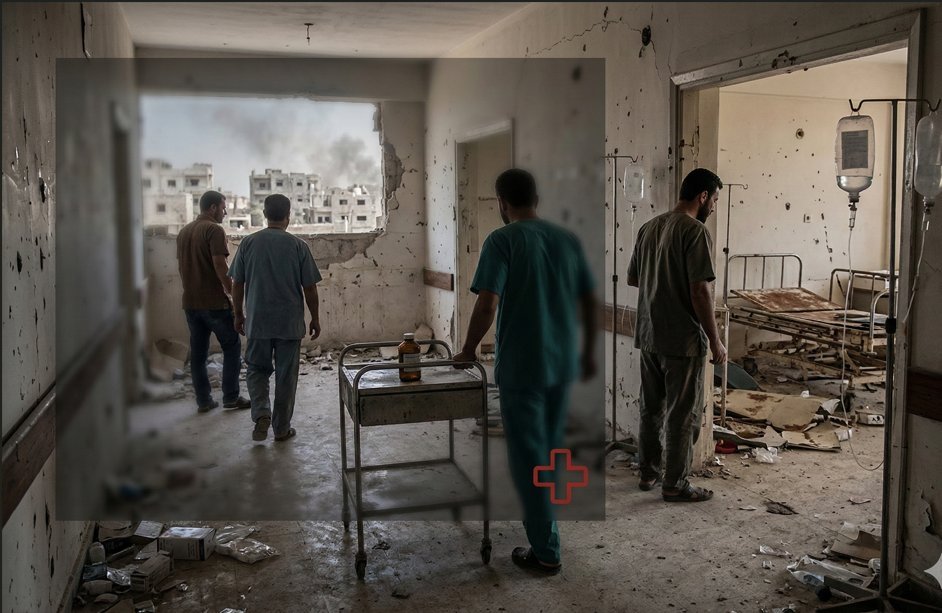
Hospitals stop functioning. Medicines become unavailable. Vaccination programmes are interrupted. Pregnant women lose access to emergency obstetric care. Patients with diabetes, hypertension, cancer or kidney disease lose continuity of treatment. Water and sanitation systems deteriorate. Health workers flee or become casualties. Displacement increases exposure to infectious disease and malnutrition.
These deaths may occur weeks or months after the onset of conflict and may never be recorded as conflict-related fatalities.
Conflict Mortality Crisis investigates this "silent" dimension of war by examining how the disruption and disintegration of health systems contribute to preventable indirect mortality in conflict-affected populations. The project is designed as ongoing research using real-time data from active conflict settings.
The conceptual distinction between direct and indirect conflict mortality is fundamental. Direct deaths result from violence itself. Indirect deaths arise because conflict changes the conditions necessary for survival—through disruption of healthcare, food systems, water supplies, sanitation, shelter and other essential services. WHO literature recognizes that indirect conflict deaths can be associated with displacement and disrupted access to food, potable water and health services, with vulnerable groups often facing particularly high risks.
The project therefore treats the health system as a potential mediator between conflict exposure and mortality.
The analytical challenge is substantial. In a functioning health system, a patient with a manageable condition may receive timely treatment. Under conflict, the same condition can become fatal because a facility is inaccessible, damaged or closed; essential medicines are unavailable; electricity and oxygen supplies fail; health workers are absent; transportation networks are disrupted; or patients are displaced.
This creates a chain of causation:
Conflict → health-system disruption → reduced access to essential services → delayed or forgone care → increased disease complications → excess mortality.
The project seeks to investigate this chain empirically.
A major focus is therefore placed on health-system functionality rather than facility counts alone. A hospital that physically exists but lacks staff, medicines, electricity, water or functioning equipment cannot provide the same level of care as it would under normal conditions.
This distinction is increasingly measurable. WHO's Health Resources and Services Availability Monitoring System (HeRAMS), for example, provides standardized monitoring of health-system functionality in crisis settings. Its May 2026 assessment across 19 conflict-affected countries found that health facilities in conflict zones were six times more likely to be non-operational, with nearly one in four directly affected by conflict.
Such evidence demonstrates why mortality surveillance alone is insufficient.
The project combines mortality information with indicators of health-service disruption to understand how changes in health-system functionality correspond with changes in population risk. Depending on data availability, this may include facility operational status, availability of essential medicines, health-worker presence, service utilization, maternal and child health services, disease surveillance, displacement and access to water and sanitation.
Particular attention is required for populations whose survival depends heavily on continuous healthcare: newborns, pregnant women, older people, people with chronic diseases, people requiring dialysis or cancer treatment, and populations living in displacement.
The project also addresses a major methodological problem: how do we estimate deaths that were not directly caused by violence?
This requires establishing counterfactual expectations—what mortality would plausibly have looked like in the absence of conflict—and comparing these expectations with observed mortality during periods of health-system disruption. The concept is closely related to excess mortality estimation, where deaths above an expected baseline are used to capture both direct and indirect effects of a crisis.
The significance of this research extends beyond mortality measurement. If indirect deaths constitute a substantial component of conflict-related mortality, then protecting hospitals, health workers, supply chains, vaccination systems, water infrastructure and primary healthcare is not simply a humanitarian objective. It becomes a mortality-prevention strategy.
Conflict Mortality Crisis therefore reframes the question from "How many people were killed by the conflict?" to a broader and more consequential question:
"How many additional people are dying because the systems that normally keep them alive have stopped functioning?"
By documenting this hidden pathway from conflict to mortality, the project aims to strengthen humanitarian health planning, crisis surveillance and evidence-based protection of essential health services in active conflict environments.
Primary objective: To investigate the relationship between conflict-related health-system disruption and preventable indirect mortality, using real-time evidence from conflict-affected settings to quantify and explain mortality beyond direct deaths from violence.